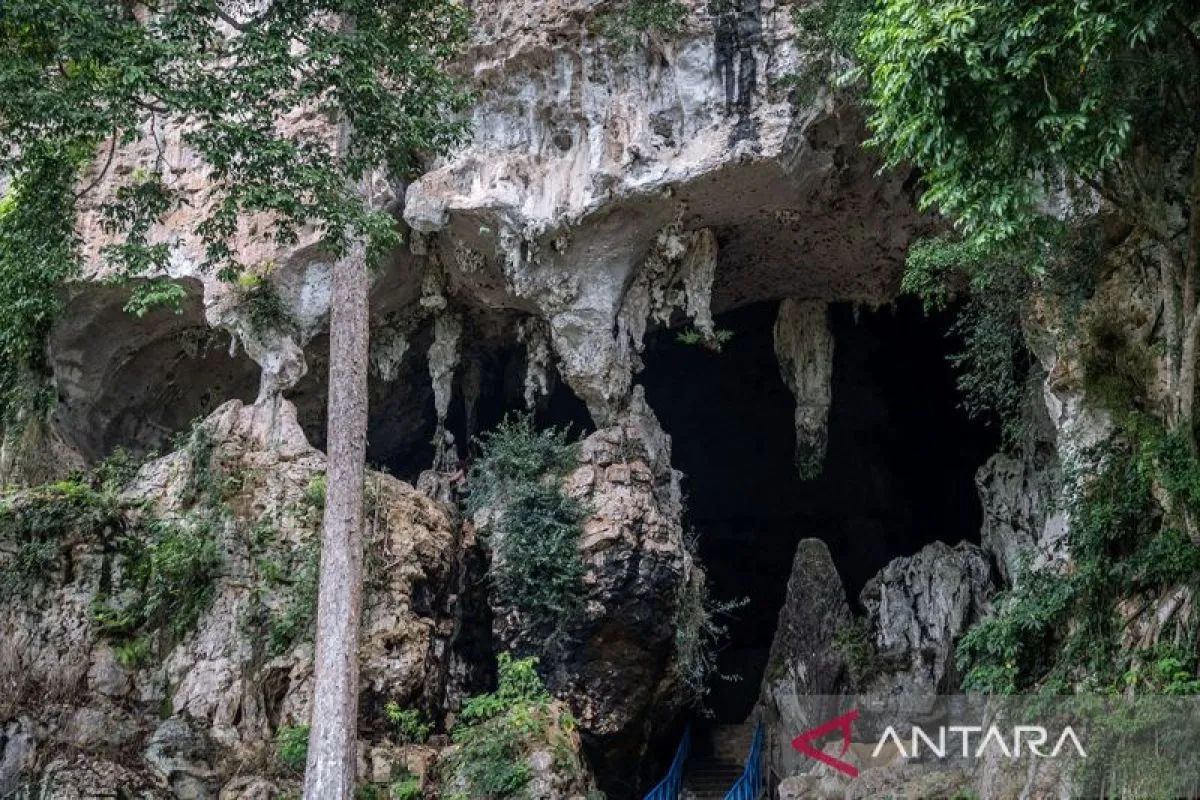
This is Batu Hapu Cave located in Batu Hapu Village in Tapin District, South Kalimantan. It is almost 31 kilometers from Rantau, Tapin capital, or 37 kilometers from the historical site of the Oranje Nassau Mine, using either two-wheeled or four-wheeled vehicles.
The word "Hapu" is a local language meaning white, referring to the dominant color of the cave walls. Geologically, the cave was formed from Berai Formation limestone, approximately 16–36.5 million years old, during the Oligocene to Early Miocene period, when the area was still in a shallow sea less than 30 meters deep.
With a peak elevation of approximately 120 meters above sea level, the cave has a large mouth and a spacious interior. It features stalactites, stalagmites, cave curtains, and other karst ornaments that formed naturally over millions of years.
"If you go inside, the aerosphere is different. It's peaceful and cool, perfect for both natural and educational tourism," said Pardiyana, chair of Batu Hapu Cave Tourism Awareness Group (Pokdarwis).
From fertilizer to natural tourism
Batu Hapu Cave had long been utilized by local residents for fertilizer, before it became a tourist attraction. Farmers used to collect bat droppings for natural fertilizer. Thousands of bats hung from the cave ceiling, creating an ecosystem that remains intact to this day.
This cave is home to various bat species that have not yet been fully identified. Locals recognize at least three colors: white, reddish brown, and black, that coexist within the cave.
Read also: Charm of Sasirangan from Belangian Village
The cave's function began to change coincided with the arrival of transmigrants around 1980s. Over time, the area gradually gained traction as a recreational destination. One example, the cave became a venue for folk entertainment, featuring Malay orchestra performances.
Pardiyana and several other residents have been involved in pioneering and maintaining this cave since 1987. They now maintain it so it remains undamaged and accessible to local residents.
Since 2022, tourism management has become more organized. The Batu Hapu Pokdarwis now has 16 members who actively care for the area, maintain cleanliness, and accompany tourists.
The number of tourist increased after village officials built a park and supporting facilities. They are not only local or domestic tourists, but also from abroad, such as Australia, Italy, Portugal, India, and other countries.
With an entrance fee of IDR 5,000 per person, Batu Hapu Cave has become an affordable natural tourism destination.
Read also: Meratus Dayak towards economically independent thanks to bamboo rafting
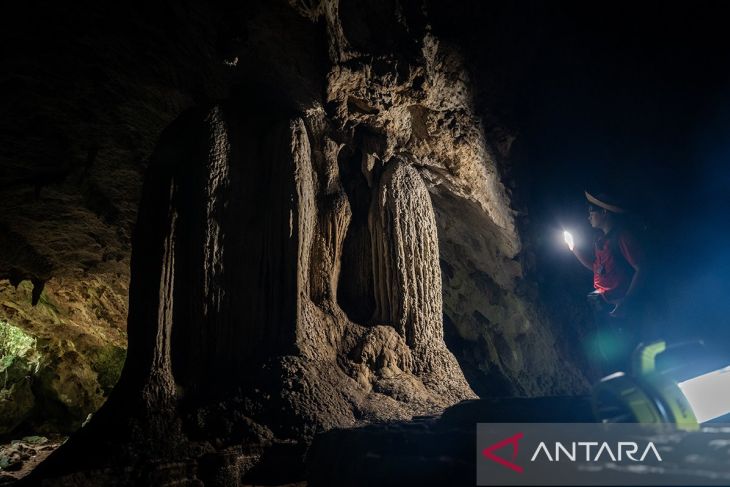
Besides the main cave, Batu Hapu Village has other two caves containing springs and underground rivers, and one cave specifically for bat habitats that is planned to be opened for limited research and education.
There is also a rock climbing area known as Goa Gunung (Mountain Cave), which is often used by nature lovers.
44th Site of Meratus Geopark
The strategic value of Batu Hapu Cave was further strengthened after it was designated as part of the Meratus Geopark. In 2018, the area, along with 53 other sites, was officially designated a National Geopark by the Indonesian National Geopark Committee.
The Meratus Geopark covers an area of 3,645.01 square kilometers, with 54 sites spread across four routes: west, north, east, and south.
Batu Hapu Cave is listed as the 44th site and is located on the northern route, representing the formation of the Meratus Mountains.
International recognition came when UNESCO recognized the Meratus Geopark as a member of the UNESCO Global Geopark (UGGp). The certificate of recognition was received by South Kalimantan Governor H Muhidin, accompanied by the Indonesian Ambassador to France Mohamad Oemar, in Paris, France, on June 3, 2025.
Batu Hapu Village Head, Mardiono, stated that the geopark status has had a very positive impact on the village.
Read also: Meratus Geopark must have an impact on people's well-being
"The designation of Meratus Geopark provides many benefits. Batu Hapu Cave is becoming increasingly well-known, not only nationally but also internationally," he said.
However, he acknowledged, that village officials still face challenges and obstacles, particularly regarding funding to further develop the cave.
Nevertheless, he hopes the Meratus Geopark can foster collective public awareness to protect the tourist area.
"This is not just about tourism, but also about the geological and cultural heritage that we must preserve together," said Mardiono.
Batu Hapu Cave also holds a local legend, as local people believe the cave was formed from the wreckage of a disobedient son's ship cursed by his mother, Nini Kudampi, a poor widow. This allows the story to coexist with scientific facts about geological processes millions of years ago.
In the bowels of the Meratus Mountains, Batu Hapu Cave stands as a witness to the earth's journey, uniting nature, history, and culture.
Editor : Mahdani
COPYRIGHT © ANTARA 2026


