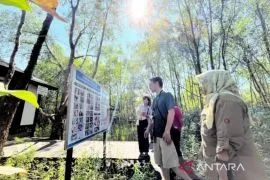
SBI founder Dr Amalia Rezeki said ecologically, efforts to conserve wetland ecosystem on Curiak Island have increased rambai mangrove vegetation. While the surrounding communities has benefited from the increased quality and quantity biodiversity
The Curiak Island area had previously experienced degradation of its riparian mangrove forest. Rambai mangrove trees, which provide habitat for fish and spawning ground for giant prawn were damaged and their roots were harvested for bottle cap industry or for making cork for batminton shuttlecocks, leading to loss and death of many trees.
In efforts to conserve bekantan, which is the faunal mascot of South Kalimantan, SBI team also restoring rambai mangrove.
Its ecosystem supports bekantan's habitat. It is the primary food source for these long-nosed and reddish-black hair monkeys.
With its distinctive root system, rambai mangrove also serves as breeding ground for giant prawn.
More than 25,000 rambai tree seedlings have been planted on Curiak Island, and some have even become small islands.
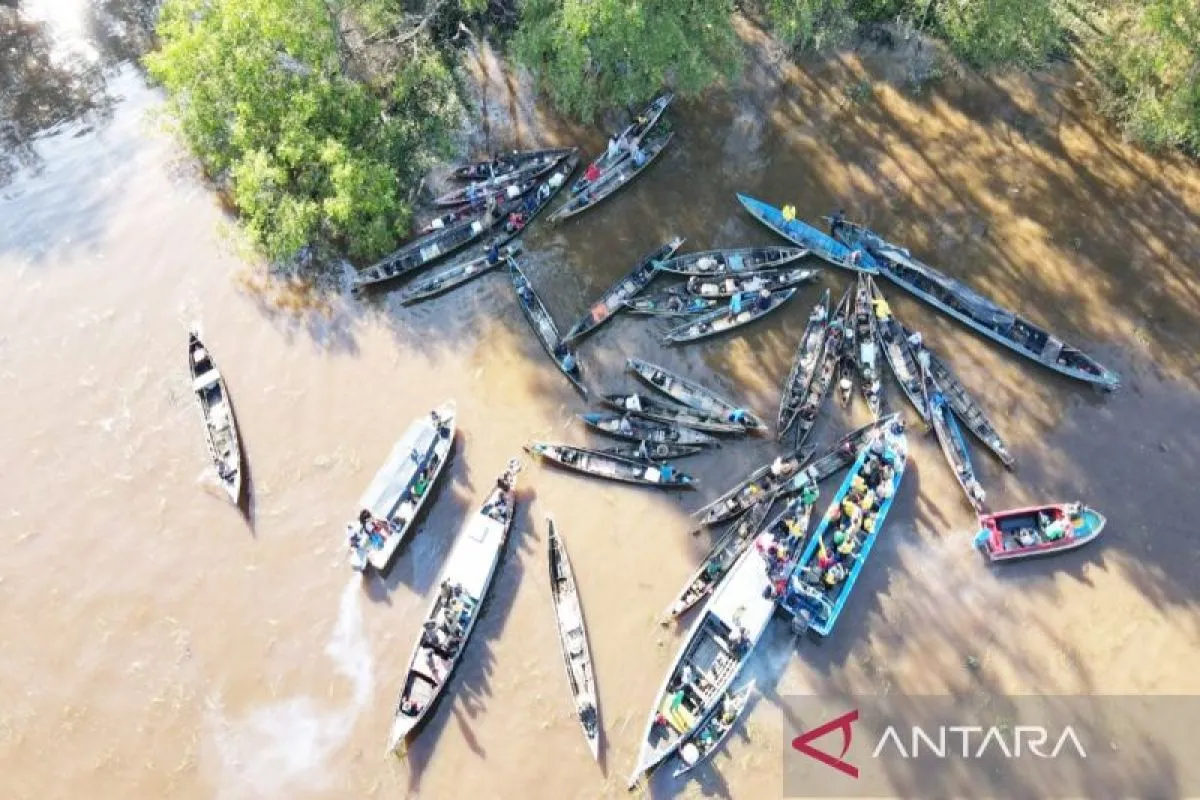
Every day, fishermen flock to catch prawn and fish in the area, making Curiak Island truly favorite spot for local fishermen.
Meanwhile, SBI's conservation efforts have succeeded to increase the population of proboscis monkeys from 14 they found in 2015 now becomes 54.
Not only bekantan, here you can find groups of lungurs, slender-bodied, long-tailed primates.
Read also: A closer look at Bekantan's life in Curiak Island, South Kalimantan
Harmonious life of both primates in the wetland ecosystem reflects the well-preserved quality of the area on Curiak Island.
Besides these two endangered primates, there are numerous reptiles such as snakes and monitor lizards, as well as hundreds of birds species, which during the migration season attract thousand of birds singing and perching around the island.